

Portfolio Case Studies
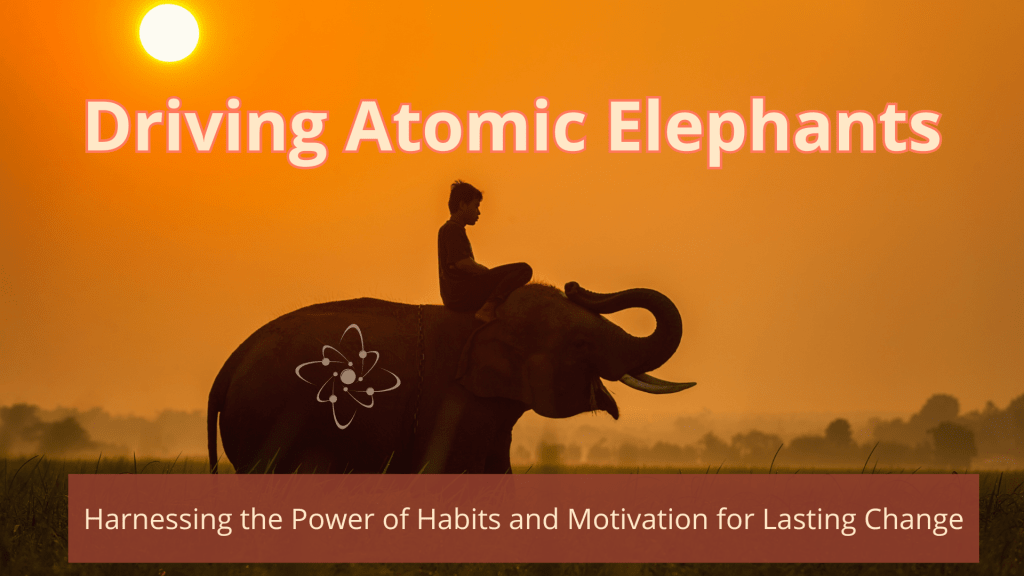
VILT Session: Driving Atomic Elephants
Project Summary
I designed and facilitated a professional learning session to help colleagues understand and apply evidence-based behavioral change strategies drawn from the research behind Drive, Atomic Habits, and Switch. The session translated behavioral science into practical workplace and personal development tools that support reflective learning and continuous growth.
- Role: Learning Strategist, Instructional Designer, Facilitator
- Audience: Cross-functional professional colleagues, including individual contributors and people leaders
- Focus: Supporting sustainable behavior change and continuous learning culture development
- Delivery Format: 60-minute interactive webinar delivered in American Sign Language
- Design Emphasis: Translating behavioral science research into practical workplace learning tools
- Methods Used: Narrative learning architecture, structured reflection exercises, applied habit design frameworks
- Artifacts Created: Custom visual learning metaphors, downloadable reflection and planning toolkit, guided learning activities
Learning Opportunity
Across collaborative environments, individuals and teams often recognize the need for change but struggle to sustain new behaviors or challenge long-standing patterns. Informal observations and peer discussions suggested the presence of mindset barriers and habit-based resistance to change, particularly when change required shifts in motivation, identity, or daily routines.
This session was designed to bridge research on motivation, habit formation, and change psychology with practical strategies that learners could apply in both professional and personal contexts. The goal was to help learners understand how change occurs and to equip them with structured tools to sustain it.
Strategic Approach
I designed this learning experience using behavioral change and adult learning principles, with emphasis on reflection, application, and learner autonomy.
Key design strategies included:
- Synthesizing complementary behavioral science frameworks into a unified learning narrative
- Using metaphor and storytelling to increase accessibility and engagement
- Designing guided reflection activities to support personal application
- Embedding structured tools that learners could use beyond the session
- Creating inclusive and accessible delivery for a multilingual and Deaf audience
Instructional Design Decisions
Narrative Learning Architecture
The session followed a structured arc connecting motivation, behavior formation, and sustained change. This approach mirrored the conceptual progression across the source frameworks while simplifying complex theory into actionable learning steps.
Applied Reflection Activities
Participants engaged in structured exercises to identify intrinsic motivators, analyze existing habit patterns, and develop personalized change strategies.
Practical Learning Transfer Tools
Downloadable worksheets and templates supported learners in continuing reflection and goal development after the session, extending learning beyond the webinar environment.
Accessibility and Inclusive Design
The session was delivered in American Sign Language and supported by visual learning materials to ensure clarity, engagement, and accessibility for Deaf participants and multilingual learners.
Learning Solution
The final learning experience included:
- A 60-minute interactive webinar delivered in American Sign Language
- Original visual metaphors and supporting learning materials
- Self-assessment and reflection tools aligned to behavioral science research
- Structured learning activities supporting habit design and change planning
- Practical resources designed for ongoing learner use
Impact & Learning Culture Contribution
While this session was not tied to a formal performance initiative, it supported the development of a learning culture by introducing accessible behavioral science concepts that participants could apply in their work and personal growth.
The session contributed to:
- Increased awareness of motivation and behavior change strategies
- Structured reflection opportunities supporting personal development
- Reinforcement of continuous learning and knowledge sharing
- Inclusive learning access for Deaf participants through ASL delivery
Reflection & Evolution
This project strengthened my interest in designing learning experiences that influence mindset and behavior, not just knowledge acquisition. If expanding this work today, I would explore:
- Longitudinal reflection tools to support sustained behavior change
- Peer accountability or coaching models to reinforce learning transfer
- Data collection methods to measure behavioral application over time
- Scalable microlearning reinforcement strategies
Driving Atomic Elephants reflects my approach to learning as a catalyst for individual growth and organizational culture development through applied behavioral science.
Multimedia Learning Module: Articulate Storyline
Project Summary
I designed an asynchronous learning experience that helps Early Childhood Education students apply the North Carolina Foundations framework to real classroom planning. The module addressed inconsistent learner application and motivation challenges by using scenario immersion, scaffolded learning, and branching feedback. The solution was adopted into curriculum coursework and remains in use today.
- Role: Learning Strategist and Instructional Designer
- Audience: Adult learners preparing for educator roles
- Focus: Learning transfer and application
- Tools: Articulate, multimedia, scenario design
Learning Challenge
Students were required to use the North Carolina Foundations framework across multiple courses, yet faculty observed inconsistent student ability to interpret and apply the document when planning learning experiences.
Several learner characteristics influenced the design approach:
• Wide variation in educational experience
• Large population completing coursework as an employment requirement
• Moderate learner resistance to theory-based materials
• Need for practical workplace application
The learning solution needed to improve comprehension while increasing learner confidence and real-world transfer.
Strategic Approach
I designed the module using performance-focused learning principles.
My approach emphasized:• Scenario immersion to anchor learning in authentic educator tasks
• Scaffolded knowledge progression to support learners with varying experience levels
• Formative branching feedback to support corrective learning pathways
• Multimedia and accessibility integration to support diverse learners
• Application-based assessment aligned to real instructional decision-making
Instructional Design Decisions
Scenario-Based Engagement
Learners entered the module through a realistic classroom planning scenario. This establishes relevance and increased motivation by connecting content to professional practice.
Scaffolded Learning Architecture
Content progressed from understanding the framework’s structure to applying developmental indicators to instructional activities.
Formative Feedback Branching
Learners received targeted review pathways when they encountered misunderstandings, supporting mastery before proceeding.
Cognitive Load Management
Content was chunked into guided walkthroughs and applied practice opportunities to prevent overload and support retention.
Accessibility Integration
The module included closed captioning, audio narration, and interactive components to support multiple learning preferences.
Learning Solution
The final module included:
• Introductory scenario
• Knowledge activation pre-assessment
• Guided walkthrough of framework structure
• Interactive application activities
• Branching remediation support
• Scenario-based summative assessment
The module was built using Articulate to support asynchronous delivery and interactive learning experiences.
Impact & Sustainability
The module was adopted within coursework supporting Early Childhood Education students and continued to be used after initial implementation.
The design supported:• Increased instructional consistency across courses
• Reinforcement of applied learning rather than text memorization
• Flexible learner pacing in asynchronous coursework
• A reusable learning asset supporting faculty instruction
Reflection and Evolution
If I were expanding this solution today, I would incorporate:
• Learning transfer evaluation aligned to workplace planning performance
• Instructor dashboards tracking learner application patterns
• Data-informed iteration cycles
• Microlearning reinforcement assets
• AI-supported scenario variations to increase contextual practice
This project shaped my continued focus on designing learning experiences that support real workplace decision-making rather than content exposure alone.
Additional Artifacts
Work Samples Include:
- Articulate Storyline
- PowerPoint
- Genialy
- Graphic design
- Canva
- Image editing
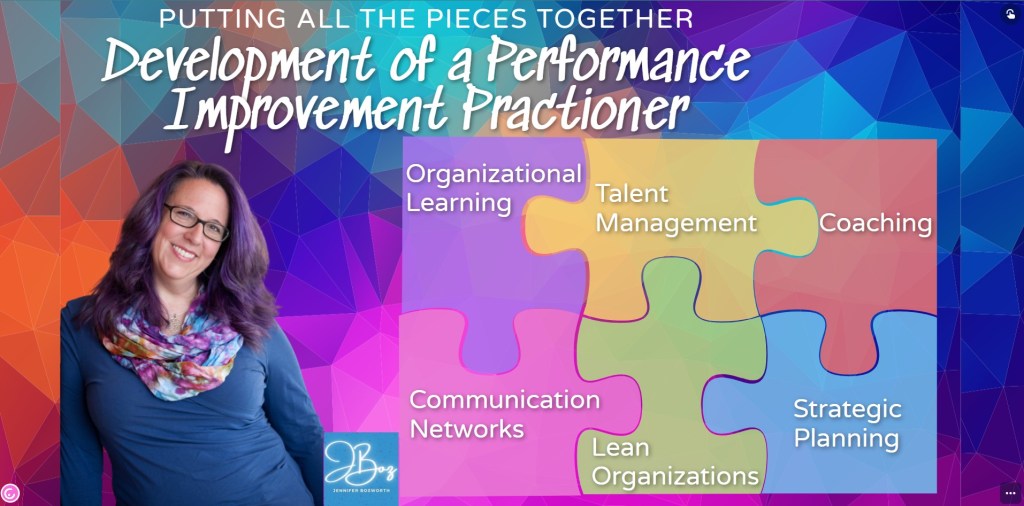
- Professional Association work
- DaVinci Resolve
Click each image to see each artifact.


 Jennifer Bosworth's Portfolio